In international trade, the choice of transportation mode directly affects the delivery time, cost, and overall transaction experience of goods. For enterprises, understanding the characteristics of different modes of transportation and making decisions based on actual needs is a key part of trade knowledge. This article will start with the basic knowledge of international transportation methods, analyze their advantages and disadvantages in depth, and provide practical suggestions for enterprises to optimize trade efficiency by combining practical cases and industry trends.
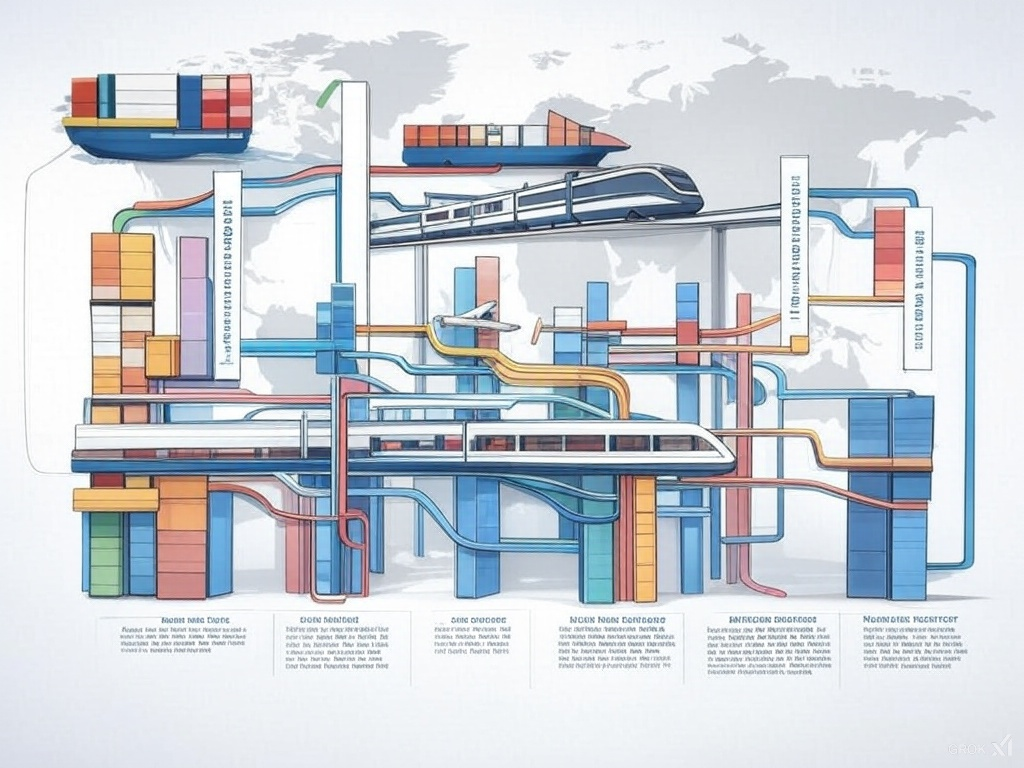
How to choose international transportation methods to improve efficiency. jpg
1、 Trade knowledge: What are the international transportation modes?
The main modes of transportation in international trade include the following, each with different applicable scenarios and characteristics:
Ocean Freight
Features: Transported by cargo ship, with large capacity and low cost.
Applicable scenarios: Large quantities of non emergency goods, such as raw materials, furniture, etc.
Air Freight
Characteristics: Transported by plane, fast speed but high cost.
Applicable scenarios: high-value, lightweight, or urgently needed goods, such as electronic products and pharmaceuticals.
Rail Freight
Characteristics: Land transportation, with cost and speed between sea and air transportation.
Applicable scenario: long-distance cross-border trade, such as the "the Belt and Road" route from China to Europe.
Multimodal Transport
Features: Combining multiple modes of transportation (such as sea freight and railway), with strong flexibility.
Applicable scenarios: Complex routes or transportation of goods that require transshipment.
Understanding the basic characteristics of these transportation modes is the foundation for enterprises to make efficient choices in trade.
2、 Advantages and disadvantages of transportation methods and key points for selection
Different modes of transportation have their own emphasis on cost, timeliness, and applicability. The following is a detailed analysis:
sea freight
Advantages: Low shipping costs, large single shipment capacity, suitable for long-distance bulk cargo.
Disadvantages: Long transportation time (usually 20-40 days), greatly affected by weather.
Key points for selection: Suitable for enterprises with sufficient inventory and not in a hurry to deliver.
air freight
Advantages: Fast speed (usually 1-5 days), suitable for emergency restocking or seasonal products.
Disadvantages: High cost, limited weight and volume.
Key selection points: Prioritize high profit or time sensitive goods.
railway transportation
Advantages: lower cost than air freight, better delivery time than sea freight (about 15-25 days), and high stability.
Disadvantage: Limited line coverage, requiring coordination with other transportation methods.
Key points for selection: Suitable for China Europe trade or cross-border land transportation.
multimodal transport
Advantages: Strong flexibility, able to optimize the balance between cost and timeliness.
Disadvantage: High coordination difficulty, requiring professional management.
Key points for selection: Suitable for complex logistics needs across regions.
3、 Case study: Practical optimization of transportation modes
For example, a clothing exporting company needs to ship a batch of seasonal products to the United States. Initially, sea freight was chosen to save costs, but due to a transportation cycle of up to 35 days, it missed the peak sales season and lost profits. After that, it was adjusted to the multimodal transportation of railway+sea transportation, which shortened the time limit to 22 days, and the cost was only 40% of that of air transportation, and finally realized a sales growth of 20%. This case demonstrates that choosing a reasonable mode of transportation can significantly improve trade efficiency.
4、 Industry Trends and Data Insights
The international transportation industry is experiencing new changes. According to Chinese customs statistics in 2024, sea transportation still accounts for 70% of global trade transportation, but the proportion of railway transportation has risen to 12%, especially in countries along the "the Belt and Road". At the same time, the trend of green logistics is driving companies to choose low-carbon transportation methods, such as railways, which have about 30% lower carbon emissions than sea freight (data source: International Logistics Association). In the future, with the popularization of intelligent logistics technology such as drone delivery, transportation efficiency will be further improved.
5、 Practical advice: How to choose the appropriate transportation method
Based on trade knowledge and practical experience, the following are suggestions for enterprises when choosing international transportation modes:
Clarify the characteristics of the goods: match the transportation method based on the value, volume, and timeliness requirements of the goods. For example, high-value products can be shipped by air, while bulk goods can be shipped by sea.
Balancing cost and timeliness: By calculating the total cost (freight+inventory cost+opportunity cost), choose the most cost-effective solution.
Pay attention to market trends: During peak seasons, sea freight may be congested, so plan ahead or switch to railway transportation.
With professional support: collaborate with logistics experts to design multimodal transport solutions and optimize complex routes.
VI. Summary
The international transportation mode is a core content in trade knowledge, which directly affects the delivery efficiency and market competitiveness of enterprises. By understanding the characteristics of different modes of transportation and combining them with actual needs, enterprises can find the best balance between cost and time. Whether pursuing low-cost long-term trade or seizing the market for fast delivery, scientifically choosing transportation methods is the key to success. I hope the analysis and suggestions in this article will bring new ideas and value to your international trade practice.